300 Hour Yoga Teacher Training in Rishikesh, India — advanced TTC at Maunvan Ashram. Yoga Alliance RYT-300/500. 30 days, all-inclusive.
Yoga Alliance RYT-300 Registered · Small Groups Max 12 · All-Inclusive · Prerequisite: 200hr Certificate
300 Hour Yoga TTC in Rishikesh
The 300 Hour Yoga TTC in Rishikesh at Maunvan is a 30-day advanced residential program for certified yoga teachers. Yoga Alliance RYT-300 registered. Leads to RYT-500 combined with your 200 Hour certificate. Covers advanced asana, therapeutics, Yin yoga, Yoga Nidra, advanced pranayama, and philosophy. All-inclusive. Max 12 students. Runs monthly at Maunvan Ashram, Himalayan foothills, Rishikesh, India.
The 300 Hour advanced yoga teacher training at Maunvan is designed for working yoga teachers who have completed their 200 Hour and are ready to go significantly further. It is not a continuation of the same curriculum — it is a qualitatively different program that assumes you already understand the fundamentals and are asking deeper questions. Maunvan has been training yoga teachers since 2012 — over 2,000 graduates across 40 countries have completed programs here. The 300 Hour covers advanced asana, applied yoga therapeutics, Yin yoga, Restorative yoga, Yoga Nidra, advanced pranayama, and in-depth yogic philosophy.
The program is Yoga Alliance RYT-300 registered. Combined with your existing 200 Hour certificate, it qualifies you to apply for the RYT-500 — the highest standard level of Yoga Alliance's international teaching credential, recognised globally by yoga studios, retreat centres, and teacher training programs. Groups are capped at 12 students per batch — small enough for genuine individual attention from the faculty. The course runs on a residential, all-inclusive basis: accommodation, sattvic meals, study materials, and Yoga Alliance registration support are included. A valid 200 Hour TTC certificate from any Yoga Alliance Registered School is required to enrol.
What is the 300 Hour Yoga Teacher Training in Rishikesh
The 300 Hour Yoga Teacher Training in Rishikesh is the advanced professional development program for certified yoga teachers. It is not a longer version of the 200 Hour — it is a fundamentally different course for teachers ready to move from competence to genuine expertise. Where the 200 Hour builds your foundation, the advanced program builds the diagnostic ability and philosophical depth that distinguishes an experienced teacher from a recent graduate.
The practical difference matters for your students. In a standard class, you learn to sequence and cue. In this advanced training, you learn to work with a student who has a lower back injury, a shoulder impingement, or a connective tissue disorder — not by modifying one posture but by adapting the entire practice to their body. You study the physiological mechanisms behind pranayama, not just the procedures. You engage with the Yoga Sutras as a working text, not a historical overview. You learn Yin yoga and Restorative yoga at a depth that allows you to run specialist workshops and teach specialist populations — not just add one slower class to your schedule.
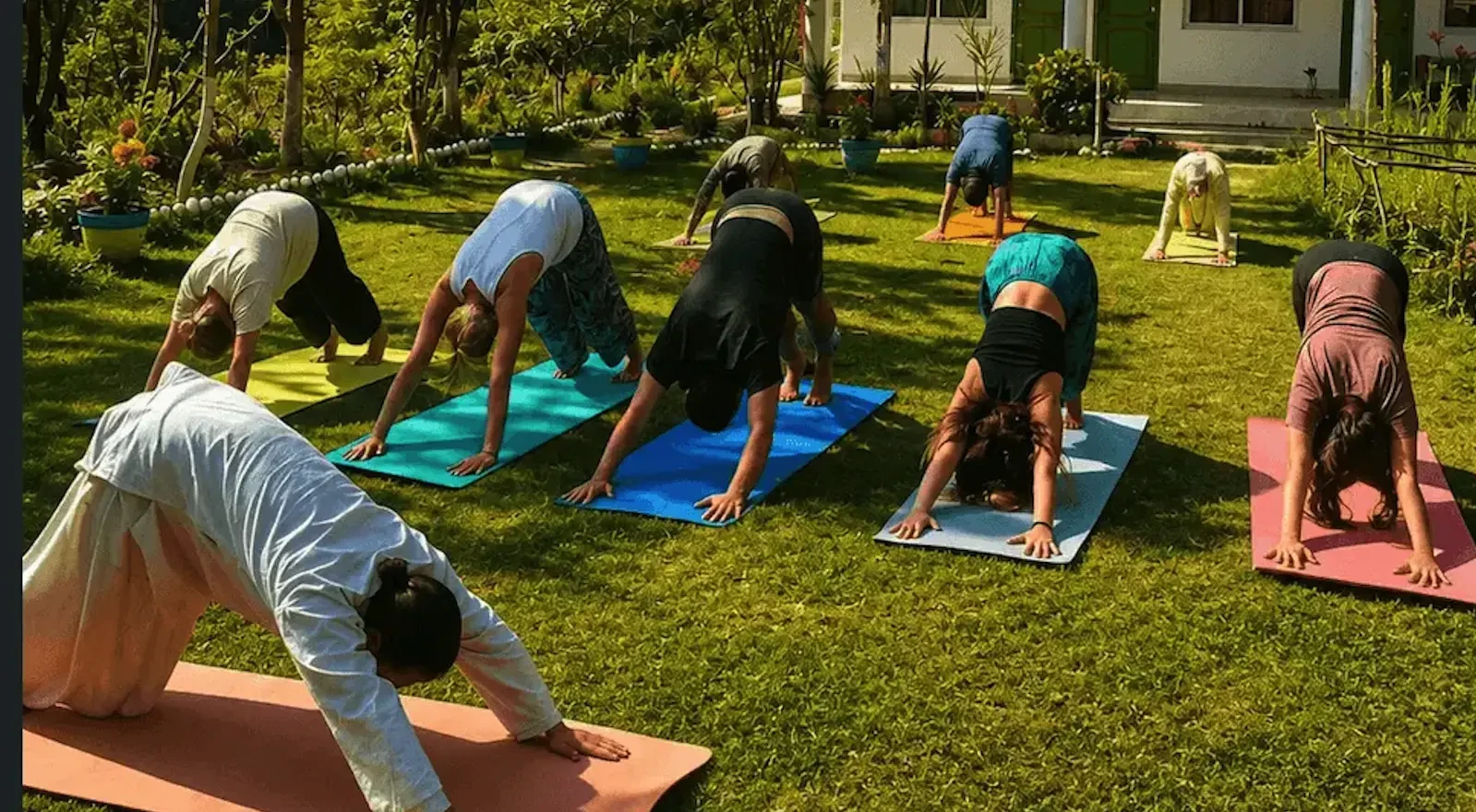
At Maunvan, the 300 Hour YTTC in Rishikesh takes place at the same Himalayan ashram as the 200 Hour program — the early morning pranayama on the hillside, the sattvic meals, the forested environment above the Ganga valley. But the pace, the depth, and the expectations are different. Students arrive with a functioning personal practice and real teaching experience. The 30 days at Maunvan is where the questions that arise from that experience get serious answers.
A 200 Hour TTC certificate from any Yoga Alliance Registered School is required to enrol. Teachers who completed their 200 Hour at a different school are welcome to apply — share your certificate and a brief note on your teaching experience and we will review your application individually.
Course Dates & Fees 2026 / 2027
New batches begin on the 1st of each month throughout the year. The course runs for 30 consecutive days. Maximum 12 students per batch — prerequisite 200hr certificate required. Contact us to confirm availability for your preferred date. You can also explore our 200 Hour Yoga Teacher Training or yoga retreat programs at Maunvan.
Start Date
Single Room
Sharing Room
Coming Soon
—
—
Coming Soon
All fees are all-inclusive — 30 nights accommodation, three sattvic vegetarian meals per day, all teaching sessions, all course materials, and Yoga Alliance RYT-300 registration support. No hidden extras. Valid 200 Hour TTC certificate is required to enrol.
What Will You Learn? The 300-Hour Advanced Curriculum
The 300 Hour curriculum at Maunvan is structured around six advanced subject areas, each taught at a depth that assumes and builds on 200 Hour foundations. This is not a review course — it is a genuine advancement into specialist-level yoga knowledge and teaching skill.
A
Advanced Asana & Alignment
Deep study of advanced postures — arm balances, inversions, deep backbends, and full primary and secondary Ashtanga series sequences. Focus shifts from learning asanas to understanding them at the level of biomechanics, breath, and energetic architecture. You study how to teach challenging postures safely to practitioners with varying anatomical proportions and limitations.
Pr
Advanced Pranayama & Kriyas
The classical Shatkarma kriyas — Neti, Trataka, Nauli, Kapalabhati, Dhauti, Basti — studied with their physiological mechanisms and the contexts in which they are taught appropriately. Advanced pranayama techniques including Kumbhaka (breath retention), Surya Bhedana, Chandra Bhedana, and their therapeutic applications. The nervous system science behind each technique.
Th
Applied Anatomy & Therapeutics
This is where the advanced curriculum adds its most practically valuable content for working teachers. You study common musculoskeletal conditions — lower back pain, SI joint dysfunction, rotator cuff issues, knee injuries, hypermobility — and learn how to adapt a full practice for each. Yoga as therapy: evidence-based approaches, contraindications, and the bridge between yoga and contemporary rehabilitation.
Ph
Advanced Philosophy & Ethics
In-depth study of the Yoga Sutras of Patanjali (all four padas), the Hatha Yoga Pradipika, and the Upanishads relevant to the yoga tradition. Teaching ethics — the teacher-student relationship, power dynamics in the yoga space, cultural appropriation, trauma-sensitive teaching, and the responsibilities that come with the role of a yoga teacher. This is the dimension most 200 Hour programs leave out.
TM
Advanced Teaching Methodology
Building a sustainable teaching career — class design, workshop design, retreat design, and business fundamentals for yoga teachers. Advanced cueing: language that produces insight, not just physical compliance. How to teach beginners versus advanced practitioners. How to run a trauma-sensitive class. How to give meaningful feedback to students at different stages of practice. Peer teaching with detailed individual feedback assessed throughout the training.
Sp
Specialty Teaching: Yin, Restorative, Nidra
Three specialist modalities taught to a professional standard. Yin yoga — the meridian theory, the tissue physiology, and the sequencing logic of a Yin practice. Restorative yoga — prop setup, nervous system science, and designing a genuinely restorative sequence for post-injury, post-illness, or high-stress populations. Yoga Nidra — the classical and modern protocols, the states of consciousness they access, and how to script and lead an effective nidra session.
What Does a Typical Day Look Like?
The daily structure follows the same classical yogic rhythm as the 200 Hour TTC but with a more advanced practice and a heavier academic load. You are expected to have a functioning personal practice on arrival — the morning sessions move at a pace appropriate for experienced practitioners. Self-study time in the afternoon is used for genuine independent research and teaching preparation, not catch-up on basics.
05:30 AM
Wake Up
Rise before sunrise. Cold or warm water wash and prepare for morning practice.
06:00 AM
Advanced Pranayama & Meditation
Advanced pranayama sequences including Kumbhaka, Surya and Chandra Bhedana, and selected Shatkarma kriyas. Followed by seated meditation — trataka or mantra-based practice.
07:30 AM
Advanced Asana Practice
90 minutes of advanced Hatha or Ashtanga practice — primary and secondary series, advanced arm balances and inversions, backbend progressions. Detailed alignment work at a pace appropriate for experienced practitioners.
09:00 AM
Breakfast
Warm sattvic vegetarian breakfast. Light enough to support the morning practice and the focus required for the academic sessions that follow.
10:00 AM
Advanced Anatomy / Therapeutics
Two hours of advanced applied anatomy — specific pathologies, therapeutic adaptations, evidence-based yoga therapy protocols, and case study analysis of common student injuries and conditions.
12:00 PM
Advanced Philosophy / Teaching Ethics
Deep textual study of the Yoga Sutras (all four padas), the Hatha Yoga Pradipika, and Upanishadic texts. Teaching ethics, the politics of modern yoga, trauma-sensitive pedagogy, and the responsibilities of the advanced teacher.
01:00 PM
Lunch & Rest
Main sattvic meal of the day. Free time for rest, self-study, journaling, or walking in the ashram grounds.
02:30 PM
Advanced Teaching Methodology
Peer teaching sessions with detailed feedback, workshop design, specialist class planning (Yin, Restorative, Nidra), advanced cueing technique, and observed teaching assessment. More intensive feedback and higher standards than the 200 Hour.
04:00 PM
Afternoon Practice (Yin / Restorative / Nidra)
Specialist afternoon modality sessions — Yin yoga one afternoon, Restorative the next, Yoga Nidra sessions on selected evenings. These are studied both as practice and as the material you will teach.
06:00 PM
Self-Study
Independent research, teaching preparation, textual study, and writing assignments. The 300 Hour has a heavier self-study requirement than the 200 Hour — plan to use this time fully.
07:00 PM
Dinner
Light sattvic evening meal. Nourishing and easily digestible before sleep.
08:00 PM
Satsang / Discussion
Evening philosophical discussion, mantra practice, or group inquiry. At 300 Hour level, satsang sessions are more advanced — genuine dialogue with the teachers about practice, teaching, and the tradition.
What is Included in the Fee?
The course fee covers everything for the full 30 days. There are no add-ons required and no charges on arrival beyond what is quoted here.
All textbooks, study notes, and reference materials
🏅
Yoga Alliance RYT-300 Support
Guidance on RYT-300 and RYT-500 registration
📜
Certificate
300 Hour TTC Certificate from Maunvan RYS
✕Exclusions
✈️
Flights & Travel
International and domestic travel to Rishikesh
👜
Personal Expenses
Shopping, laundry, and personal items
🛡️
Travel Insurance
Strongly recommended; arrange before travel
🧘
Yoga Mat
Mats and props provided; bring your own if preferred
🔏
India Visa
Arrange your Indian e-Visa before travel
Where Do You Stay?
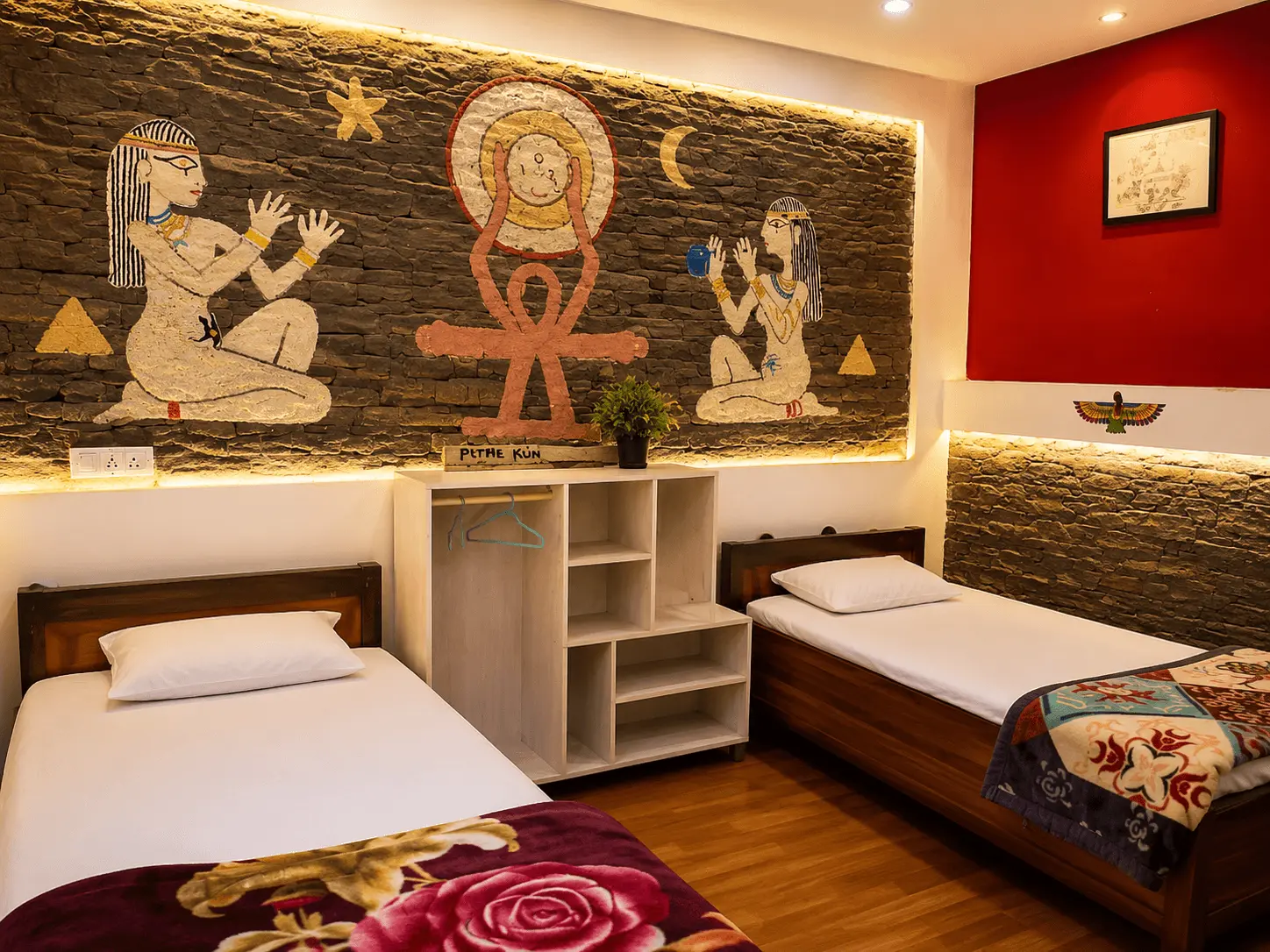
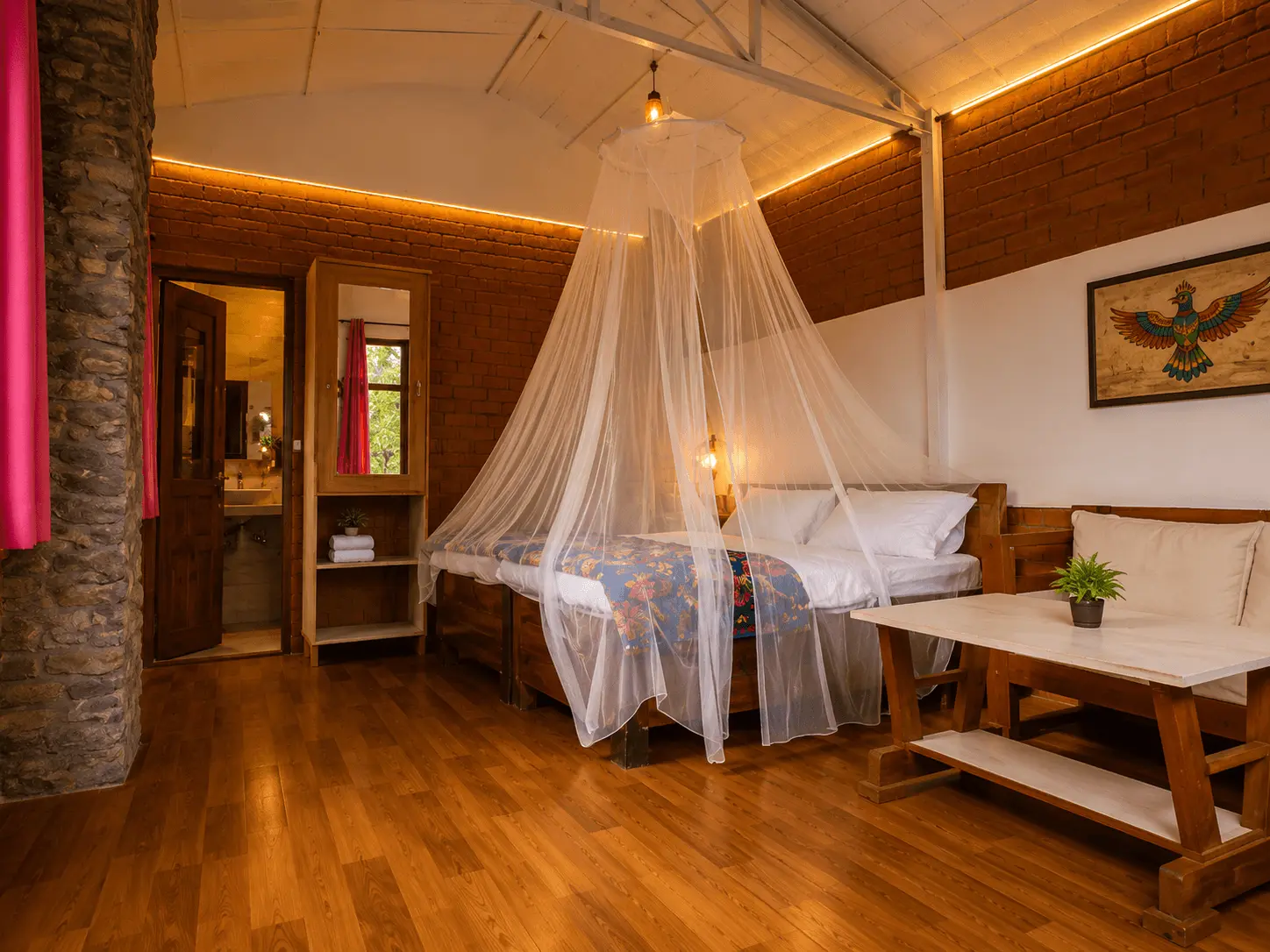
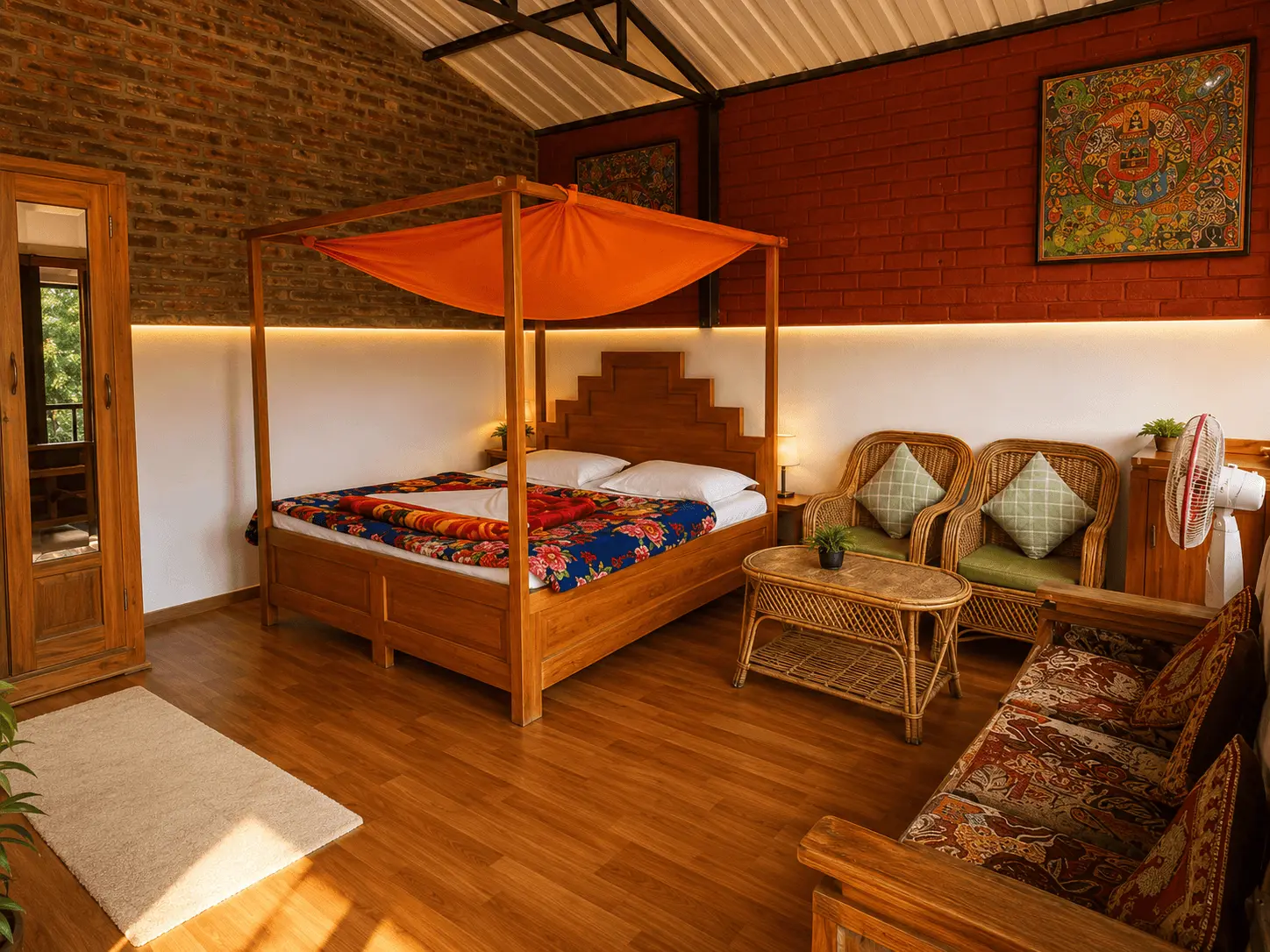
You live at Maunvan ashram for the full 30 days — the same setting as the 200 Hour TTC and our yoga retreat programs. A forested ridge above the Ganga valley in the Himalayan foothills, genuinely away from the noise of central Rishikesh. The living environment is simple, clean, and designed for the depth of focus the 300 Hour demands.
🛏
Private Single Room
Your own room for the 30-day training. The strongly recommended option for the 300 Hour given the heavier self-study and teaching preparation load — you will need quiet, private time to study, write, and prepare for observed teaching sessions. Simply furnished with a comfortable bed, study space, and storage.
🛌
Shared Room
Shared with one other course participant of the same gender. The more economical option. Note that at 300 Hour level the self-study and teaching preparation is more intensive than at 200 Hour — discuss with your room partner to ensure mutual respect of study time.
🌿
Himalayan Ashram Setting
Forest paths, meditation garden, and natural quiet surround the living quarters. For a 300 Hour program, which goes deep into the contemplative and philosophical dimensions of yoga, this environment is not a backdrop — it is part of the education. The Ganga valley below, the Himalayan ridges in the distance, and the forest that holds the ashram in genuine natural stillness.
🚿
Clean Facilities
Hot water, clean bathrooms, and regular housekeeping throughout the training. The simplicity of the living environment is appropriate for the depth of the work. Everything you need is here and well maintained.
Why Choose Maunvan?
There are many schools offering a 300 Hour Yoga TTC in Rishikesh, but the choice of where to do your advanced yoga teacher training in Rishikesh matters more than the choice of 200 Hour school. By this stage you already have a qualification — the real question is whether the 300 Hour Yoga Teacher Training course in Rishikesh you choose will genuinely make you a better, more knowledgeable teacher, or simply add a number to your credentials. Here is what separates the Maunvan approach.
12
Maximum 12 Students
At this level, where so much of the learning comes from observed teaching and individual feedback, group size is the single most important variable. A maximum of 12 students means every observed teaching session gets detailed, specific feedback — not a five-minute comment in a class of 25. This is non-negotiable at Maunvan.
RYS
Yoga Alliance RYT-300 Registered
Maunvan is a Yoga Alliance Registered Yoga School (RYS). Your certificate from this course, combined with your 200 Hour certificate, qualifies you to apply for the RYT-500 — the highest level of Yoga Alliance credential, recognised by senior teaching positions and international retreat centres.
🕉
Rooted in Classical Tradition
The 300 Hour curriculum at Maunvan draws from the classical yoga texts — not as historical curiosities but as living frameworks for understanding the practice and the teaching. Patanjali's Sutras are studied in full. The Hatha Yoga Pradipika is a working text, not a reference. This depth distinguishes genuinely educated teachers from credentialed practitioners.
ALL
All-Inclusive Fee
$1,400 (single) or $1,250 (sharing) covers 30 nights, all meals, every session, all materials, and Yoga Alliance registration support. No extras. Many schools advertise a headline TTC fee and then charge separately for accommodation, meals, and certification. Maunvan does not operate this way.
🏔
Himalayan Ashram Environment
The depth of study and practice this advanced program requires is incompatible with a noisy urban environment. Maunvan's location on a forested ridge above the Ganga valley provides the quiet, the natural rhythm, and the genuine contemplative space that make 30 days of intensive yoga study viable and nourishing rather than exhausting.
🎓
Teaching Assessment You Can Learn From
The teaching assessment in the 300 Hour is not a box-ticking exercise. Each observed session receives a written evaluation by the resident teacher — specific, honest, and pedagogically grounded. You leave knowing exactly where you are strong, where you need to develop, and what to work on in the months after the training. Assessment that produces growth, not just a grade.
300 Hour Yoga Teacher Training Rishikesh India — At a Glance
Maunvan's 300 Hour Yoga Teacher Training in Rishikesh, India is a 30-day advanced residential program for certified yoga teachers. Yoga Alliance RYT-300 registered — combined with your 200 Hour certificate, it leads to the RYT-500. Curriculum: advanced asana, therapeutics, Yin yoga, Restorative yoga, Yoga Nidra, advanced pranayama, and in-depth philosophy. Maximum 12 students. All-inclusive. This 300 Hour Yoga Rishikesh course runs monthly at Maunvan Ashram, Himalayan foothills.
Frequently Asked Questions
What are the prerequisites for the 300 Hour TTC at Maunvan? +
You must hold a valid 200 Hour Yoga Teacher Training certificate from a Yoga Alliance Registered School. The 300 Hour TTC is an advanced course that builds directly on 200 Hour foundations — it does not re-teach the fundamentals. Students who attempt a 300 Hour program without a solid 200 Hour background consistently struggle with the pace and depth of the curriculum. If you completed your 200 Hour training at a different school, share your certificate details when you apply so we can assess your background. We also recommend having at least some teaching experience before beginning the 300 Hour — even if you have not yet built a regular teaching schedule, the practical teaching sessions in the 300 Hour benefit enormously from prior experience of actually standing in front of students.
How is this program different from the 200 Hour TTC? +
The 200 Hour TTC builds foundational understanding — the asana practice, the basic principles of pranayama, the overview of philosophy, the first steps in teaching. The 300 Hour goes much deeper into every area. Advanced asana study shifts focus from learning postures to understanding their biomechanics, contraindications, and adaptations. Anatomy moves from the overview of muscles and joints to applied therapeutics for specific conditions. Philosophy moves from an introduction to the Yoga Sutras to an in-depth study of all four padas and additional classical texts. Teaching methodology shifts from how to lead a class to how to design a workshop, work with specialist populations, and build a sustainable career. The 300 Hour also introduces specialist modalities — Yin yoga, Restorative yoga, and Yoga Nidra — taught to a level where you can lead professional specialist classes.
Can I do the 200 Hour and advanced training at Maunvan back-to-back? +
Technically you could book consecutive monthly batches, but we actively discourage it. The 200 Hour TTC is demanding — completing it and immediately entering the 300 Hour without a period of integration and real-world practice does not serve you well. The 300 Hour curriculum assumes you have spent time applying what you learned in the 200 Hour — teaching, practising, encountering the questions that only arise when you are standing in front of real students. Most graduates return for the 300 Hour six months to a year after completing the 200 Hour. That time of lived teaching experience makes the advanced training far more valuable. We are happy to discuss your specific situation when you contact us.
What certification do I receive after the 300 Hour TTC? +
You receive a 300 Hour Yoga Teacher Training Certificate from Maunvan Yoga and Wellness, a Yoga Alliance Registered Yoga School. Combined with your 200 Hour certificate, this qualifies you to apply for the RYT-500 designation with Yoga Alliance — the advanced level of the international yoga teaching credential. The RYT-500 is recognised as the highest level of general yoga teaching qualification and is what most senior positions, international retreat centres, and advanced training programs ask for when hiring or accepting teaching faculty.
How much does the 300 Hour Yoga Teacher Training cost? +
The 300 Hour TTC at Maunvan costs $1,400 for a single private room or $1,250 per person for a shared room. Both prices are all-inclusive — 30 nights of accommodation, all sattvic vegetarian meals throughout the course, every teaching session, all course materials and textbooks, and Yoga Alliance registration support. There are no hidden fees, no charges on arrival, and no optional extras that are actually required. What is quoted is the total cost of the program.
Will this course count toward my RYT-500? +
Yes. Completing both a Yoga Alliance registered 200 Hour TTC and a Yoga Alliance registered 300 Hour TTC qualifies you to apply for the RYT-500 designation. Maunvan is a Yoga Alliance Registered Yoga School for both the 200 Hour and 300 Hour programs, so your certificates from both courses will satisfy the Yoga Alliance requirements for RYT-500 registration. We guide graduating students through the registration process as part of completing the course.
Can I join if I completed my 200 Hours at a different school? +
Yes, provided your 200 Hour certificate is from a Yoga Alliance Registered School and you have been actively practising and ideally teaching since completing it. When you apply, share your 200 Hour certificate details, the school you attended, the date of completion, and a brief description of your practice and teaching experience since the course. We review each application individually and will advise honestly whether you are ready for the 300 Hour curriculum at Maunvan. If there are gaps in your 200 Hour foundation that would make the 300 Hour difficult, we will tell you directly rather than enrol you and have you struggle.
How long is the 300 Hour Yoga TTC? +
The 300 Hour TTC at Maunvan runs for 30 consecutive days. Batches begin on the 1st of each month. The program includes approximately 300 contact hours of instruction — advanced asana practice, anatomy and therapeutics sessions, philosophy classes, teaching methodology, and assessed teaching practice — plus scheduled self-study time each afternoon. You arrive the evening before the start date and depart the morning after the final day.
What does RYT-500 mean and why does it matter? +
RYT-500 stands for Registered Yoga Teacher at the 500-hour level — the advanced tier of Yoga Alliance's international teaching credential. It is earned by completing both a Yoga Alliance registered 200 Hour TTC and a registered 300 Hour TTC. The RYT-500 is recognised globally as the benchmark for experienced, professionally trained yoga teachers. Most senior teaching positions at established studios, international retreat centres, and advanced teacher training programs list RYT-500 as a requirement. It also opens eligibility for additional Yoga Alliance credentials, including continuing education provider status.
Page last updated:
Apply for the TTC
300 Hour Yoga Teacher Training — Maunvan, Rishikesh